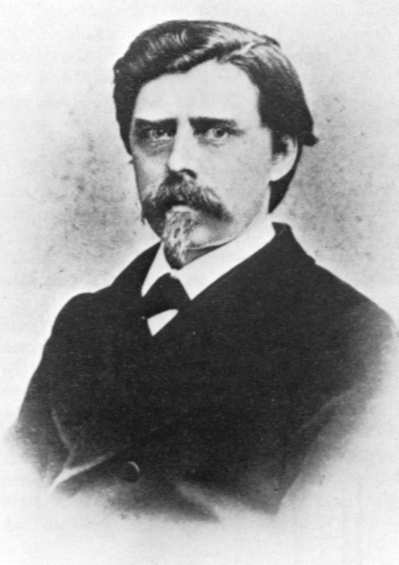
After a short AGM, our guest speaker Philip Miller Tate gave a talk (with demonstrations) about the extraordinary life and achievements of David Edward Hughes (1829-1900). Hughes demonstrated a musical talent from an early age and his father formed David and his two brothers into a music hall act called “The Child Prodigies” which continued to perform when the family moved to America in 1840.
Hughes was appointed as a Professor of Music and Philosophy in 1842 but he also started to experiment in various areas. His early inventions included a rock crushing machine for mining and an improvement in gut instrument strings but his most successful invention was the printing telegraph machine which, unlike Morse code, printed text at the other end. He also made improvements in carbon contact microphones and invented the induction balance which could detect and locate small amounts of metal. In one of his experiments he experienced the phenomenon of radio waves without realising what it was. He obtained patents for his telegraph machine but donated his other inventions to the public.
A fascinating talk which is difficult to summarise in this brief account.
Image courtesy of Wikimedia Commons